Articles in the Electrical Safety Category
Electrical Safety, Headline, News »
- By Roger Ford, Safety and Training Coordinator
The Occupational Safety and Health Administration (OSHA) mandates that companies provide an electrically safe workplace for all personnel. To define what this means, OSHA turns to the National Fire Protection Association (NFPA) and its NFPA 70E standard.
NFPA 70E continues to evolve as new thinking on electrical safety is introduced. The latest edition, NFPA 70E 2012, has changed significantly from the 2009 edition of the standard, and to help you understand how 70E 2012 impacts your company, D.L. Steiner has prepared this summary of …
Electrical Safety, News »
A DVD-based electrical safety training course, Electrical Safety in the Workplace—The NFPA 70E and You!, is available from D.L. Steiner. This course is a great introduction to electrical safety for unqualified personnel and ideal refresher training for qualified personnel who’ve already taken an NFPA 70E-based electrical safety training class. Topics include NFPA 70E and the law, the cost of ignoring electrical safety, common electrical safety hazards, and key concepts of electrical safety.
This 30-minute training DVD can be purchased for $149.99. Accompanying student workbooks that also serve as a verification of …
Electrical Safety, Featured, Headline »
Lockout/tagout is one of those “good news-bad news” safety topics. The good news is that most companies are generally doing a better job of addressing lockout/tagout issues than they are other safety concerns. The bad news is lockout/tagout programs for plant electrical systems, for the most part, are still not as well defined as those for other energy sources. This article presents basic considerations that will help you establish a workable electrical lockout/tagout program at your facility.
First, understand that an electrical lockout/tagout program is not an option. Electrical lockout/tagout falls …
Electrical Safety, Featured »
Because the design of an electrical system is based on distributing power, we can easily lose sight of its other important functional criteria and if we don’t consider these, longterm system operating costs will skyrocket. To avoid this, electrical systems need to be designed for reliability, safety, and ease of maintenance.
Designing for reliability—For new construction or system updates, the dollars saved installing underrated or marginal equipment is quickly offset by maintenance and downtime. All new equipment should undergo reliability testing and verification.
Designing for safety—Too often, poor design compromises system safety, …
Electrical Safety, Headline »
First in a series of articles Questions People Ask Us?
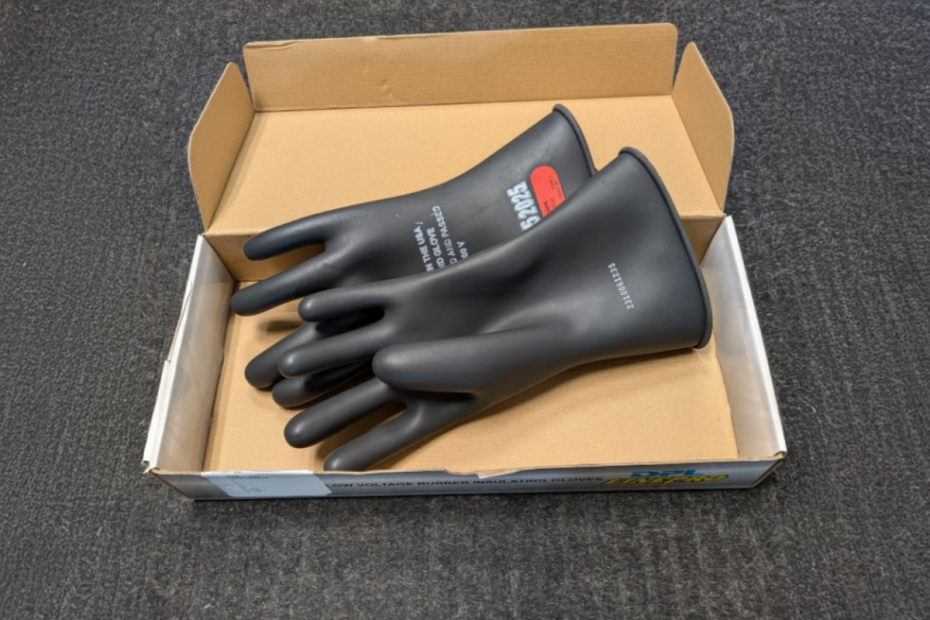
There is no doubt that wearing gloves is clumsy and makes the electrical worker’s job more difficult. It is not surprising, then, that D.L. Steiner, Inc. is often asked whether or not workers are required to wear their gloves when working on a de-energized panelboard, control panel, or PLC cabinet. The answer to this question has three parts.
Part One: an Observation to Clarify the Situation
What is being considered here is a cabinet in which the local switch has been turned to …
Electrical Safety, Featured, Headline »
The NFPA 70E now requires regular auditing of an employer’s electrical safety program. What must a company do to stay compliant?
Electrical Safety, Featured, Headline »
What! more red tape . . .why should I bother with arc flash studies?
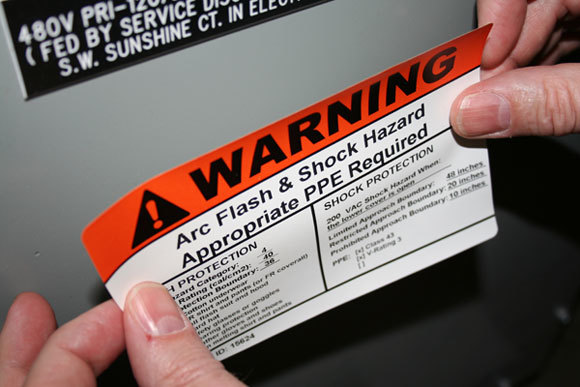
An unsuspecting electrician opens an electrical panel only to discover that he has let loose a lethally dangerous explosion—light flashes so bright that it permanently damages eyes, heat that is 4 times the surface of the sun incinerates clothing and flesh, molten shrapnel bores upon him with bullet-like speed, and a blast wave that throws him like a rag doll with a pressure wave of hundreds or thousands of pounds per square inch.
Approximately 2000 workers will be …